Editor's Pick

Milano-Cortina 2026 Winter Olympics Infrastructure Plan: Regional Legacy Strategy

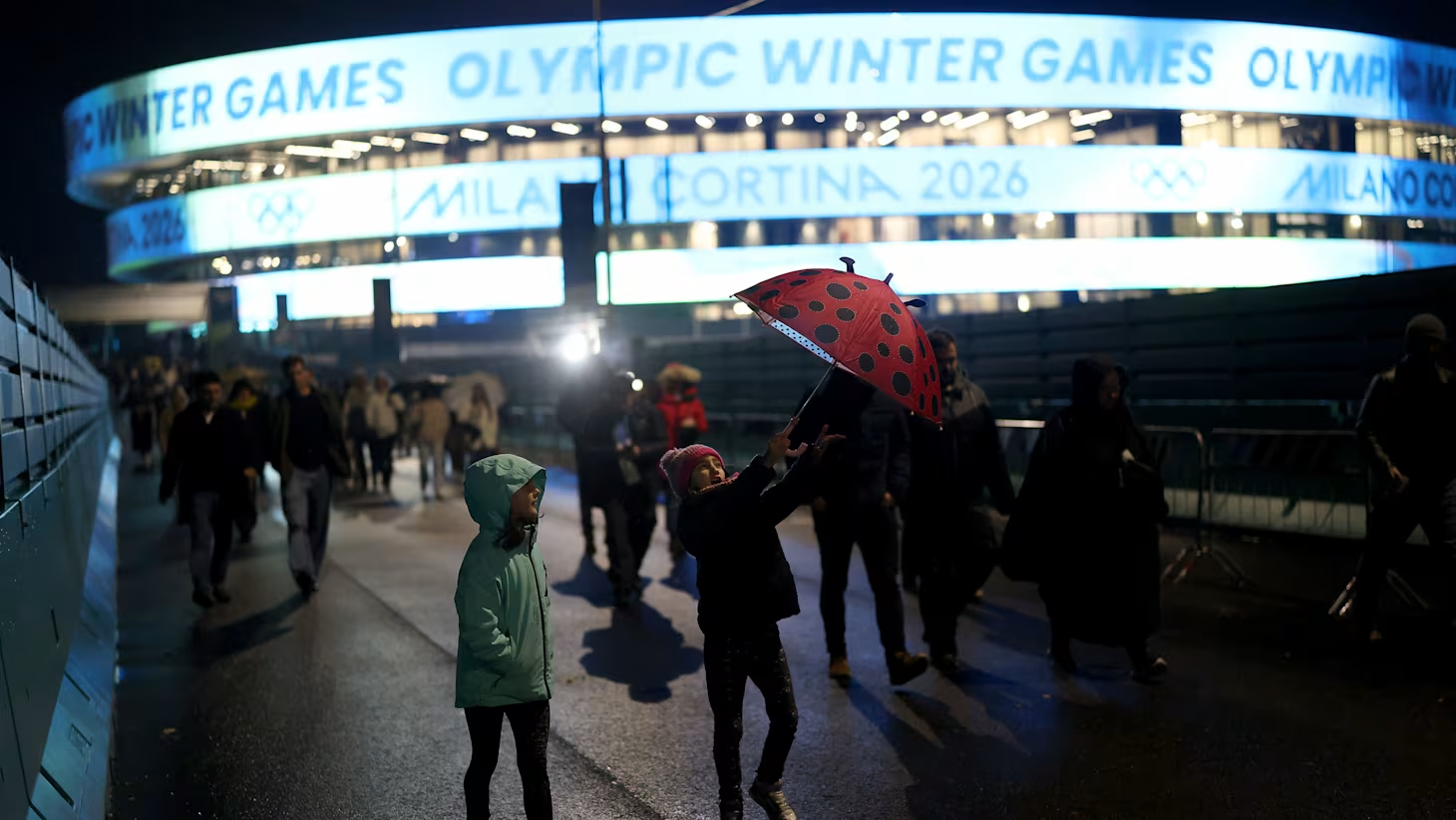
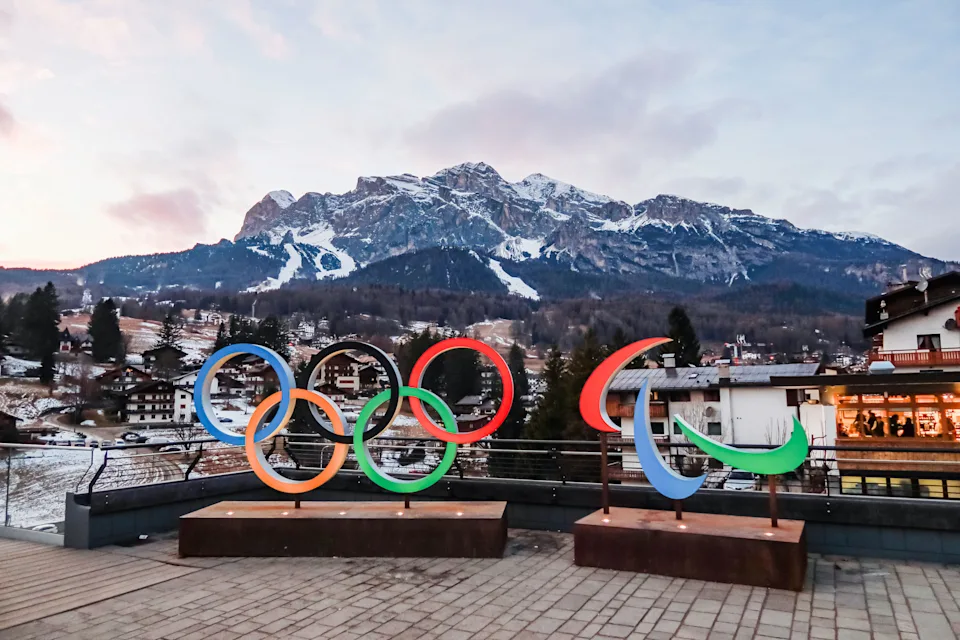
Milan and Cortina d’Ampezzo will host the 2026 Olympic and Paralympic Winter Games this month under rules that force every euro to support long-term regional plans, not just a 16-day sports event. €5 Billion Lombardy-Veneto Stress Test Organizers have folded the Games into existing Lombardy and Veneto budgets for transport, hospitals, and housing instead of building a stand-alone mega-site. Bocconi and Ca’ Foscari University consultants estimate the method will add about €5 billion in net economic value and 36,000 job-years if post-event tourism and digital commerce rise as forecast. Alpine Towns Receive Accessibility Upgrades Cortina’s Codivilla Hospital, Belluno’s San Martino facility, and the Livigno Health Centre are gaining new wings, elevator banks, and snow-load roofs so services stay viable after the cameras leave. Railway stations in Trento and Bolzano are adding platform lifts, tactile paving, and high-speed Wi-Fi—equipment disability groups have requested since the 1990s but that mountain geography made too costly for any single town to fund. Social Procurement Channels €1.77 Million to Micro-Firms Impact 2026 has already steered €1.77 million in contracts to 76 social cooperatives and micro-enterprises that hire migrants, people with disabilities, and formerly incarcerated workers. More than 400 firms have trained in sustainable tendering; a digital portal pushes new bid notices to local phones each week. Organizers will reuse the same quota system at the 2028 Dolomiti Valtellina Winter Youth Olympics, locking inclusive purchasing into regional routine. Visa Survey: 95% of Businesses Expect Gains An Ipsos poll financed by Visa shows 64% of small and medium-sized enterprises in Lombardy and Veneto predict higher sales during the Games; 86% list the incoming tourist wave as the main benefit. Nearly half have renovated storefronts, added English e-commerce check-outs, or installed contactless readers. Forecasted usage for February reaches 99% in retail and 98% in food service—levels that, if they hold, could ease the off-season revenue dips that hit mountain resorts every year. 85% of Venues Renovated, Not Built From Scratch Roughly 85% of competition sites—including the Milan Ice Hockey Arena, the Stelvio slope in Bormio, and the Eugenio Monti bobsleigh track—need only refurbishment, cutting capital risk and shortening delivery times. Four local Event Delivery Entities, rooted in existing alpine-ski and sled-sport federations, will run operations, keeping know-how in the valleys once the Games end. Sources: Olympic Agenda 2020+5 official PDF; Fondazione Giacomo Brodolni impact dashboard; Milano-Cortina 2026 sustainability report; Veneto Region infrastructure tracker

Lucy Parish · 2026 winter olympics 2026-03-01 09:44
Featured

Milano Cortina 2026 Parallel Giant Slalom Results: Karl and Maderova Win Olympic Gold

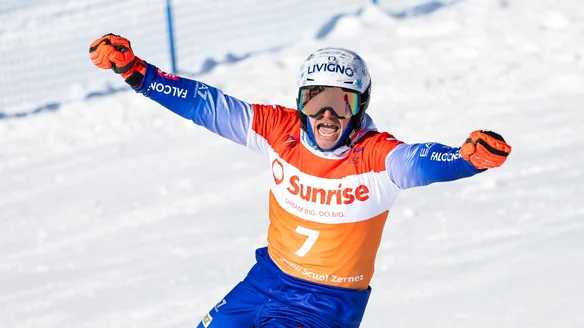
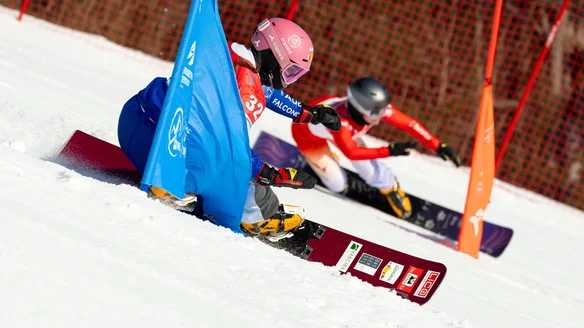
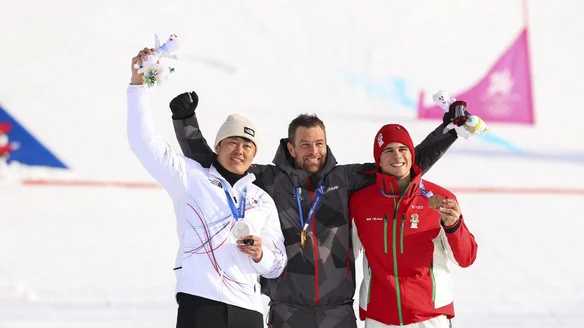
Benjamin Karl, 38, became the first man to collect three Olympic snowboarding medals, defending his parallel giant-slalom title Saturday on a day of upsets at the Mottolino course in Livigno. Austrian Veteran Makes History With Third Medal Karl beat Korea’s Kim Sang-kyum by 0.19 seconds in the Big Final, adding Milano-Cortina 2026 gold to the silver he won at Vancouver 2010 and the bronze from Sochi 2014. Seeded third after qualification, he survived a 0.03-second scare against Italy’s Maurizio Bormolini in the round-of-16, then eliminated teammate Andreas Prommegger by 0.12 in the quarter-finals and Beijing 2022 runner-up Tim Mastnak by 0.24 in the semis. Bulgaria Snares First Snowboard Medal The bronze match needed a photo finish. Bulgaria’s Tervel Zamfirov, 29, and Mastnak clocked identical times to the hundredth; high-speed frames showed Zamfirov’s left boot slightly ahead, giving Bulgaria its first Olympic snowboard medal and denying Slovenia a second straight men’s PGS silver. Czech Rookie Steps In as Ledecka Falls Ester Ledecka’s attempt at a third consecutive Olympic title ended in the quarter-finals when she trailed Austria’s Sabine Payer by 0.06 after clipping an early gate. The exit cleared the path for 24-year-old Zuzana Maderova, who had never won a World Cup race. Seeded second, Maderova beat Germany’s Cheyenne Loch by 0.36, advanced when Ramona Hofmeister crashed, and beat Italy’s Elisa Caffont by 0.45 in the semi-final. Maderova Cruises to Maiden Gold In the women’s Big Final, Maderova burst from the start and, despite a mid-course wobble, finished 0.83 seconds ahead of Payer—an eternity in parallel racing. Italy’s Lucia Dalmasso took bronze, edging teammate Caffont by 0.11 in the small final as the home crowd roared. Maderova’s prior best on the World Cup circuit had been two third-place finishes this season. Karl: ‘No Pressure, Just Snowboard’ “I already owned every color, so pressure stayed outside my bubble,” Karl told reporters before draping himself in the Austrian flag and peeling off his race suit in salute to downhill great Hermann Maier. Coaches said Karl spent race morning listening to classic rock on oversized headphones instead of studying split times—routine, he says, that kept nerves low while temperatures dipped to –14 °C and hard-pack punished the smallest skid. Useful Resources FIS Snowboard Hub – Live timing sheets, athlete bios and World Cup standings for parallel events Snowboard Austria – Technique videos and training-camp calendar used by Karl and teammates “Race Like a Pro” course analysis – Free breakdown of Livigno’s Mottolino slope angles and gate spacing Olympic Channel Replay Library – Full Milano-Cortina 2026 parallel finals available on demand World Snowboard Tour – Global competition pathway explaining how riders qualify for future Olympics

Jennifer Johnson · Snowboarding 2026-03-01 09:40
Featured

Team USA Figure Skaters Receive Custom Italian Ink Portraits at 2026 Milan Olympics

Every Team USA figure skater who walked into the Milan Olympic Village last week found a rolled ink drawing on the nightstand: a life-size silhouette of themselves mid-program, hand-drawn on Italian paper by fellow competitor Sonja Hilmer. Custom Ink Portraits Welcome U.S. Skaters in Milan The idea took shape last August when U.S. team leader Tiffany Hyden—once Hilmer’s solo-dance coach—asked for a keepsake that felt personal and unmistakably Milanese. After the roster was set at January’s national championships, Hilmer produced 16 originals in four weeks, borrowing the sharp, fashion-sketch style seen in local design studios. “No faces, just line and motion,” she said. “The hair had to do the recognition work.” From Instagram Screenshot to Finished Artwork Hyden’s brief was direct: reference Italian fashion ink drawing, keep each athlete recognizable, finish before the athletes arrived. Hilmer started by saving competition photos from photographers such as Robin Ritoss, isolating signature elements—Ilia Malinin’s quad axel take-off, Madison Chock’s matador skirt flick. She scanned the sketches into Photoshop for a digital run-through, then projected them onto 18-by-24-inch Blick paper and traced the final strokes with imported Italian ink. “The projector let me scale the leap exactly to the page,” she said. “One false brush pull and the sheet was trash.” Hairstyles Serve as Secret Identity Markers With faces left out, Hilmer relied on texture: Amber Glenn’s braided crown, the half-up knot Christina Carreira wears for rhythm dance, the wave that forms when Evan Bates releases his partner. “Men’s hair is basically aerodynamic calligraphy,” she noted. A single flick could signal Jason Brown’s classic sweep or Vincent Zhou’s shorter Olympic cut. Each bun, braid, or loose strand was drawn with a different nib width to mimic arena lighting. Athletes React to Village-Room Surprise Skaters found the drawings during their first village walk-through; most thought the rolls were venue maps until they unwrapped them. “Absolutely amazing—can’t wait to bring it home,” Glenn wrote on Hilmer’s Instagram. Pairs skater Ellie Kam replied, “So insanely talented, Sonja.” Ice dancers Carreira and Anthony Ponomarenko posted a joint story tagging the artist and the Italian tricolor emoji. Hilmer, still competing, watched reactions from the practice rink: “I’d get a mid-session text—‘You captured the flip, thank you’—and then I’d have to triple-toe right after.” Fan Requests Turn Art Into Merchandise Line Within 48 hours of the first athlete posts, Hilmer’s DMs filled with print requests. She now sells 8-by-10 reproductions and waterproof vinyl stickers through her account @gosanjaygo_03, donating part of the profit to the Figure Skating Memorial Fund that once helped pay for her own training. Demand has already outpaced her home scanner; a Denver print shop is handling bulk orders while she remains on Olympic ice for the women’s short program. “I never planned a side hustle,” she said, “but if the sport can fund the art that celebrates it, the loop feels right.” Sources: U.S. Figure Skating Team Media Guide; Sonja Hilmer Instagram @gosanjaygo_03; Blick Art Materials; Robin Ritoss Photography

Jane Smith · Figure skating 2026-02-28 11:37
Featured

Snowboarding Results: Mac Forehand Wins Silver in Men’s Big Air Final

Japanese skaters seized the podium’s top tier in the women’s short program, while U.S. men landed their second-ever big-air Olympic medal—two storylines that frame the early medal count at the 2026 Winter Games. Japanese Women Dominate Short Program Rankings Ami Nakai’s clean triple-triple combination and level-four spins earned 78.62 points, giving the 17-year-old a 1.84-point cushion over compatriot Kaori Sakamoto. Mone Chiba, also from Japan, sits fourth, meaning three of the first four places now wear the rising-sun flag. The trio train at separate rinks—Nakai in Nagoya, Sakamoto in Kobe, Chiba in Sapporo—yet all share choreographer Mihoko Higuchi, whose emphasis on seamless transitions has become a national blueprint. U.S. Skaters Split by Single Jump Error Reigning world champion Alysa Liu muscled into third with a triple axel that drew +4.14 Grade-of-Execution, but teammates Isabeau Levito and Amber Glenn left points on the table. Levito under-rotated the second jump of a planned combination, sliding her to eighth; Glenn telegraphed an intended triple-triple after landing a textbook axel, then touched down on the Salchow, relegating the three-time national titlist to 13th. The 15-place gap between Liu and Glenn equals the largest ever within one U.S. Olympic squad, data from SkatingScores.com show. Forehand’s 98-Point Trick Seals Silver In freestyle skiing’s men’s big-air final, Vermont’s Mac Forehand uncorked a switch left triple 1980 safety on the last jump, a score of 98.25 that catapulted him from fourth to second. Judges awarded two other riders 95-point rides, but none could match Forehand’s amplitude—he traveled 34 m horizontally at 5.2 m peak height, according to broadcast telemetry. The silver is the United States’ second big-air podium in four Olympic appearances; the first came via Nick Goepper’s bronze in 2022. Coaches Re-Examine Mental Load Protocols National federation memos circulating after the events highlight a pattern: athletes who nail standalone ultra-craft skills—Glenn’s axel, Levito’s triple lutz—are hemorrhaging points on subsequent elements. “Sequential cognitive fatigue is the new frontier,” said U.S. Figure Skating sports psychologist Rainer Meister, noting that pressure-triggered cortisol spikes can erode working memory within 15 seconds, roughly the interval between jump combos. Programs are now inserting micro-breathing cues and simplified key-word mantras between elements to reset attention. Broadcasters Eye Dual-Market Window With Japanese skaters commanding 75 % of the top-four screen time and an American medal on the snow side, rights holders see a sweet-spot live slot: 8-10 p.m. EST (10 a.m.-noon JST). NBC’s internal research notes that dual-national storylines lift average-minute ratings by 18 % among 18-34 viewers when both markets have podium contenders. Expect tonight’s free-skate broadcast to open with a split-screen feature on Nakai and Liu, followed by Forehand’s silver-run replay, a scheduling formula engineered for social-media clip virality across continents. Action Steps for Viewers Who Want to Follow the Drama Set a phone alert for the women’s free-skate group-two warm-up (Sun., 7:40 p.m. EST) when Nakai, Sakamoto and Liu share the ice for practice jumps. Stream the BBC’s tactical camera on iPlayer—it isolates each coach’s boards, letting you hear the pre-jump cues. Track live GOE updates on the ISU’s Judge1 app; Japanese and U.S. panels historically diverge on edge calls. Clip Forehand’s 1980 on NBC’s TikTok feed—slow-motion angle shows the ski flex that stunned judges—and compare it to the gold-run trick frame-by-frame. Source: International Skating Union event reports, NBC Sports research notes, U.S. Figure Skating coaching bulletins

Ava Mitchell · Snowboarding 2026-02-28 18:36
Featured

How Czechia Scored With Six Skaters vs Canada in 2026 Winter Olympics

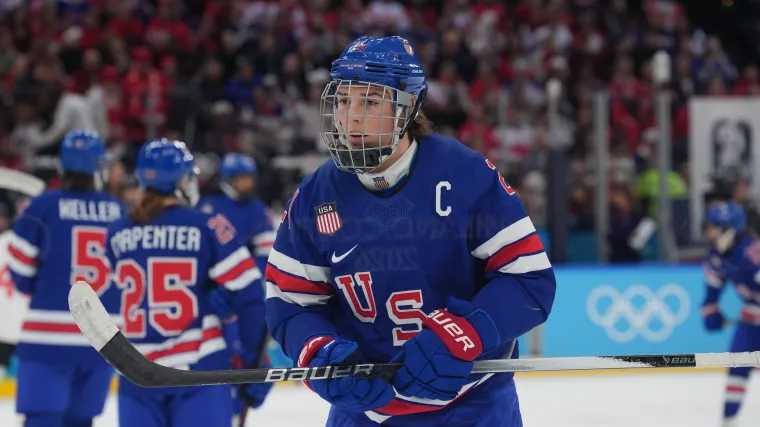
Czechia iced seven men—six skaters plus a goalie—during the 2026 Winter Olympics quarter-final against Canada, yet officials never whistled the play dead and the goal stood. Colorado Avalanche winger Martin Nečas told Sport deník this week that a bench-line mix-up, not gamesmanship, caused the illegal advantage that almost swung the tournament. [IMAGE_PLACEHOLDER_0] Third-Period Line Shuffle Sparks Bench Chaos With the score tight late in the third period, Czech coaches re-configured forward pairs to chase an equaliser. Nečas said he expected to swap with Michal Krištof while linemate Ondřej Palát stayed put. Instead, Palát and Nečas both jumped on for Krištof while David Pastrňák also hopped the boards during the same stoppage. Six skaters in white sweaters milled behind their own blue line, then sprinted up-ice, cycled the puck and buried the go-ahead goal while Canadian players appealed in vain to the nearest linesman. Officials Miss Over-Count in Real Time Television replays showed seven Czech jerseys inside the frame for 23 consecutive seconds, but the four-man officiating crew never initiated a head-count. Under IIHF Rule 74, the goal should have been disallowed and a bench minor assessed. Hockey operations later admitted the “too-many-men” alert system—used in dozens of IIHF events since 2022—was not activated because the extra player entered during a line change, creating a brief numerical grey zone. Canada’s coaching staff did not risk a coach’s challenge; the goal counted and momentum swung toward Czechia until Canada forced overtime. [IMAGE_PLACEHOLDER_1] Canada Escapes, Then Survives Two More OT Thrillers The extra-man goal became a footnote after Canada scored twice in the final six minutes of regulation and added another in 3-on-3 overtime. Sidney Crosby’s squad duplicated the drama two nights later, edging Sweden on a Connor McDavid breakaway. Only in the gold-medal game did the run end, with the United States prevailing in another extra-session shootout to claim Olympic gold and leave Canada with silver. Rare Infraction Highlights Bench Communication Gap Coaches and players across the tournament reviewed the clip in later video sessions, citing it as a textbook example of “line-change vertigo” under tournament-sized benches. Olympic rosters carry 25 skaters—three full forward lines plus spare parts—making shorthand names and jersey numbers harder to track amid crowd noise. Nečas, laughing, said he first sensed trouble while celebrating: “I look left—there’s Palić; look right—there’s Pasta. I thought, ‘way too many guys here.’” IIHF Considers Expanded Replay for Numerical Fouls Sources inside the IIHF competition committee tell Ice Ledger the federation will discuss expanding coach-initiated video review to include potential too-many-men violations when the congress meets in Zurich this September. Any rule tweak would take effect for the 2027 world championships, too late to alter Canada’s eventual silver, but soon enough—critics argue—to prevent another Winter Olympics from tilting on an uncalled seventh skater. [IMAGE_PLACEHOLDER_2] Useful Resources IIHF Official Rule Book – Complete 2026 playing rules, including Section 74 on bench minors Olympic Hockey Statistics Portal – Shift-by-shift data for every player in Milano-Cortina 2026 “Line Change Chaos” Video Breakdown – TSN Coaches Room segment illustrating common bench mistakes USA Hockey Coaching Education Program – Drill sheets to practise legal line changes under pressure Source attribution: Ice Ledger

Emily Davis · 2026 winter olympics 2026-02-27 11:35

Browse Topics

Discover stories that matter to you

Top NHL Prospect Teams Ranked: Barrie Colts, Michigan State Lead 2026 List

Top NHL Prospect Teams Ranked: Barrie Colts, Michigan State Lead 2026 List

Barrie Colts, Michigan State, Moncton Wildcats Lead 26 Feb CHL & NCAA Prospect Rankings Barrie Colts, Michigan State, and Moncton Wildcats headline the latest Prospect Power Rankings, released 25 February 2026, as playoff races tighten across the CHL and NCAA. Barrie Colts Extend Win Streak to 10 Games The Ontario Hockey League’s Barrie Colts have not lost since early February, stretching their surge to ten straight victories and climbing to second place in the Eastern Conference. Centre Cole Beaudoin (2025, Utah) fuels the run with 12 points in his past five appearances, lifting his season total to 77 and tying him for fourth among all OHL scorers. On the back end, New York Islanders prospect Kashawn Aitcheson has added 11 points in the same span, giving the Colts two of junior hockey’s hottest performers entering the final three weeks of the regular season. Michigan State Moves Past Michigan in Big Ten Race Michigan State nudges ahead of arch-rival Michigan this cycle after the Wolverines stumbled against Wisconsin and Minnesota, leaving the Spartans alone in first place in the Big Ten. Freshman winger Porter Martone (Philadelphia) continues to produce at a point-per-game pace, pairing elite speed with a heavy release that has drawn comparisons to former Spartan and current NHL all-star Cole Caufield. Coach Adam Nightingale’s club closes the regular season with two home-and-home sets; a conference title would virtually guarantee a one-seed in the 27 March NCAA tournament selection. Moncton Wildcats Ride Desnoyers Hot Streak Caleb Desnoyers (Utah) has been the Quebec league’s most productive player since the calendar flipped, registering 23 points in nine February outings and sitting out the scoresheet only once. The 17-year-old centre now has 62 points in 35 games, pushing the Wildcats within two points of first-place Baie-Comeau. Between the pipes, Detroit prospect Rudy Guimond owns a league-best .921 save percentage, the primary reason Moncton has allowed the fewest goals in the QMJHL. With 11 games remaining, the Wildcats control their path to a division banner. Everett, Boston College, Kitchener Keep Rolling Everett’s 9-1-0 run in its past ten contests has become routine; the WHL’s West-leading Silvertips continue to suffocate opponents with a league-low 2.11 goals-against average. Landon DuPont, granted exceptional status for the 2027 draft, has chipped in eight points in five games, flashing the transitional speed NHL scouts covet. Back east, Boston College sophomore James Hagens (Boston) is on a post-world-juniors tear, amassing 38 points in 28 games and projecting as a spring signee for an NHL entry-level deal. Kitchener’s Christian Humphreys (Colorado) and Jack Pridham (Chicago) remain one-two in Rangers scoring and have the club 8-1-1 in its past ten. Penn State, Armada, Firebirds Enter Top Ten Penn State freshman Gavin McKenna (2026) authored the weekend’s headline performance, posting eight points against Ohio State—the highest single-game total by a college skater in 32 years—then bagging the overtime winner 24 hours later. The Nittany Lions have moved into the NCAA bubble picture with five weekends left. In the QMJHL, Blainville-Boisbriand’s Justin Carbonneau (St. Louis) has 42 goals through 50 games, while Vegas prospect Mateo Nobert has 67 points in 52 outings, powering an 8-2 February record. Flint stays glued to the OHL’s West lead after trade-deadline pickup Kevin He (Winnipeg) produced 34 points in 22 games alongside leading scorer Nathan Aspinall (Rangers). Kelowna Rockets Peak Ahead of Memorial Cup As 2026 Memorial Cup hosts, Kelowna no longer needs to win its way into the four-team championship bracket, but the Rockets are peaking anyway. Tij Iginla (Utah) has 68 points in 37 games, good for fourth in WHL points per game, while 17-year-old goalie Harrison Boettiger (2026) has posted a .913 save percentage since 1 January. General manager Bruce Hamilton added Czech winger Vojtech Cihar (Los Angeles) at the deadline, giving coach Kris Mallette three lines capable of matching up against the Edmonton Oil Kings or Winnipeg Ice should either represent the East in late May. Useful Resources CHLStats.ca – Up-to-date scoring leaders and advanced metrics for all three major-junior leagues NCAA.com Frozen Four Central – Bracket projections, pairwise rankings, and broadcast schedules for college hockey’s championship EliteProspects 2026 Draft Tracker – Consolidated scouting notes, game logs, and NHL team fit analysis for draft-eligible players The Hockey News Future Watch 2026 – Annual magazine with top-100 prospect rankings and features on rising stars Source: Prospect Power Rankings, released 25 February 2026

John Miller · Ice hockey 2026-02-27 18:06
2026 Olympic Hockey Prelims: Format Flaws, Goalie Load, and Qualifier Impact

2026 Olympic Hockey Prelims: Format Flaws, Goalie Load, and Qualifier Impact

Preliminary play at the Milano-Cortina Olympic men’s ice hockey tournament ended on 25 February, locking eight teams into quarter-final spots and renewing complaints that the three-group format warps knockout seeding. Lopsided Pools Skew Standings Organizers again split the 12-team field into pools of four, seeding them by the November 2025 IIHF world ranking. Group A ended up with three top-ten nations; Group C held only one. Because quarter-final seeding is based on raw points and goal differential inside each pool, clubs in the lighter group posted padded stats that lifted them above teams that faced stronger opponents. Analysts have proposed cross-over games or a strength-of-schedule coefficient, yet the IIHF has left the format untouched since 2018, saying simplicity trumps math. Coaches counter that the bracket now rewards schedule luck as much as on-ice merit. Goaltender Math Under 48-Hour Turnaround Only one rest day separates the second and third preliminary games, forcing staffs to choose between riding a starter or splitting minutes. IIRF tracking shows save percentage falls 4.6 points, on average, when a goalie starts on back-to-back nights; the drop hits 7.1 points for keepers older than 30. Countries that carried three netminders and mapped an early rotation—Finland and Czechia, for instance—posted a .918 combined save percentage in second games, four points higher than teams that stuck with one goalie. The trade-off is a shorter bench up front, a squeeze that becomes acute when the qualification round adds a fourth game in five nights. Qualification Game Sharpens Or Drains Third-place finishers met second-ranked sides from each pool in Tuesday’s single-elimination qualifiers. Since the play-in was added in 2014, about one-third of the teams that survive it upset a higher seed in the quarter-finals, suggesting the extra match keeps players in rhythm but also digs into stamina. Group winners pocket a three-day break. U.S. coaches scheduled a closed-door intrasquad scrimmage, chasing tempo without travel. Others ran light recovery skates. No consensus exists. Goal Gap Holds Steady Despite Investment The top four seeds scored 68 percent of all preliminary-round goals, the largest share since NHL players returned in 1998. European development leagues have grown and Asian federations have raised budgets, yet the margin between traditional powers and emerging programs is virtually unchanged from PyeongChang 2018. IIHF development grants are partly tied to Olympic goal differential, unintentionally widening the resource gap. Critics argue that releasing funds before the tournament—based on participation, not results—would soften the blow. Variable Ice Surfaces Force Rapid Adjustment Games moved from the 1,800-metre rink in Cortina to the near-sea-level arena in Milan, producing different ice hardness and puck glide. Teams that drew one mountain and one city assignment during the prelims went 5-1 in the qualification round, hinting faster environmental adaptation. Unseasonal warmth forced crews to run auxiliary chillers overnight, pushing energy costs 15 percent above bid forecasts. In Milan, staff flooded extra ice layers and tweaked refrigeration set-points twice daily to stay inside IIHF limits. NHL Participation Still Undecided After 2026 The agreement that brings NHL talent to the Olympics expires after Sunday’s closing ceremony. Talks on insurance, travel and marketing rights are stalled; deputy commissioner Bill Daly says a 2030 tournament without NHL players is “a live possibility.” A return to amateur or club rosters would trim the elite tier, likely tighten scoring, and restore some suspense—but also remove the star power broadcasters pay for. The IIHF congress in May will debate fallback formats if the league walks. Action List for Stakeholders Tournament planners: Test a group-balancing algorithm at the 2027 World Championship. General managers: Keep a third goalie on the roster whenever turnarounds are 48 hours or less. Coaches: Schedule sessions at both mountain and low-altitude rinks before the Games. Development officers: Base grants on participation, not goal differential. Media buyers: Model 2030 viewership with and without NHL talent to price sponsorships.

Christopher Pearson · Ice hockey 2026-02-25 11:01
Justin Robidas: 5-Foot-8 AHL All-Star Leads League in Shots

Justin Robidas: 5-Foot-8 AHL All-Star Leads League in Shots

5-foot-8 Chicago Wolves winger Justin Robidas turned a size deficit into 47 AHL points and an All-Star berth, then notched his first NHL goal against Boston last spring. 5-foot-8 Rookie Leads AHL Scoring Race Robidas sits third in the league with 163 shots and second in shooting efficiency at 13.8 percent among players who have fired 150-plus pucks on net. The 22-year-old’s 21-goal, 26-assist line through 46 games puts him on pace for the most productive season by a Carolina Hurricanes draft pick still in the American League. Coaches credit an off-season power-skating regimen that began when he was eight and never stopped. Jan. 11 Burst Becomes Viral Highlight Reel Midway through the third period in Rosemont, Illinois, Robidas collected a loose puck near centre ice, burst past Manitoba’s first wave and wired a wrist shot upstairs. Nineteen ticks later he intercepted a clearing pass, walked the top of the circles and scored again, igniting a clip that surpassed one million views across team and league accounts within 48 hours. The sequence, Wolves staff noted, shaved almost a full second off the club’s average transition time. Father-Coach Duo Dissects Weekly Game Film Once a week Robidas drives to Montreal’s west island and sits in a basement theatre with his father, Stéphane, the former NHL defenceman now overseeing Montreal’s blue-line. They tag shifts frame by frame: gap control in the neutral zone, reload angles, soft-ice timing. “He sees the game backwards,” the younger Robidas laughs, meaning Stéphane still thinks like a defender while Justin hunts offence. The ritual started in peewee and has survived junior trades, pro contracts and 500 kilometres of separation. Memorial Cup Run Forged Adaptable Role Player Patrick Roy’s 2022-23 Quebec Remparts dealt for Robidas at the deadline and slotted him on a checking line behind a stacked top six. The assignment forced him to study NHL footage of Phillip Danault and Yanni Gourde, players who create offence without premium minutes. Quebec rolled through the QMJHL playoffs, captured the Memorial Cup in May, and Robidas carried the experience to Chicago where he now toggles between first-line finisher and late-game shield when the Wolves protect a lead. Entry-Level Deal Expires With Calder Ambitions The fifth-round selection from the 2021 draft will be a restricted free agent in July. Internally, Carolina’s front office has already discussed a two-year, two-way extension that would pay him NHL rate for any day spent on the active roster. Robidas says he ignores the paperwork: “My only job is to make their decision easy.” Scouts who once questioned his height now grade his first three strides as elite and list his spatial radar—finding open ice without the puck—as translatable to the faster league. First NHL Goal Came Against Olympic Champ On 5 April 2025 at TD Garden, Robidas jumped off the bench, crashed the crease and swatted a rebound past Boston’s Jeremy Swayman with 57 seconds left. The goal salvaged a 5-1 Hurricanes loss but delivered the milestone he replayed on the bus ride to Detroit the next morning. Friends from his Texas youth program and his longtime power-skating coach were in Section 14; his parents watched on television and later framed the score sheet. Action Steps Track Robidas’s March shot totals—if he maintains four per game, a 30-goal AHL season is likely. Watch Carolina’s late-season NHL injuries; a late recall would start his waiver-exempt clock. Compare his 13.8 % shooting clip to AHL graduates now scoring at NHL level; the conversion metric often predicts stick-time.

Sarah Davis · Ice hockey 2026-02-23 11:45
Women's Olympic Hockey 2026: Dominant Team's 31-1 Run Sparks Competitive Balance Debate

Women's Olympic Hockey 2026: Dominant Team's 31-1 Run Sparks Competitive Balance Debate

Women’s hockey superpower rolls into 2026 Olympic final with 31-1 goal edge 31-1 Goal Surge Reveals Olympic Imbalance The tournament favourite will skate for gold after five straight shut-outs and only one puck eluding its goalies in 16 regulation periods. The streak extends a pattern set in 1998: the same two nations have contested every Olympic final since Nagano, leaving everyone else to chase bronze. Bookmakers gave the remaining teams a combined 6 % shot at reaching the title game; the semifinals ended 5-0 and 6-1, proving even that modest figure generous. Funding Loops Favour Top Programs International Ice Hockey Federation grants use recent championship finishes as the main yardstick, so the countries already stocked with talent receive the largest cheques. During the 2023-25 cycle the two finalists pocketed about 38 % of the global women’s development fund, while the eight lowest-ranked federations shared 14 %. Critics argue the setup bankrolls the very gap it vows to close. “We’re financing the gap we’re trying to close,” one IIHF delegate said, asking not to be named because council talks are private. Defensive Suppression, Not Just Star Scorers Scouting logs credit the unbeaten roster with allowing 8.4 shots per game—one-third of the tournament average and the lowest ever charted in Olympic women’s play. Coaches cycle fresh defenders the moment the opposition crosses centre, a option possible only when roster depth runs to seventh and eighth blue-liners raised in full-time programmes. Video staff broke down 120 hours of opponent clips before the knockout round, twice the hours available to the quarter-finalists they later ousted. Tiered Groups Dilute Early-Game Drama Organisers split the ten entrants into an upper tier (ranked 1-5) and a lower tier (6-10) for openers, hoping to protect marquee teams from early upsets. Once the favourite pocketed its first two upper-tier wins, the third prelim turned into a glorified exhibition yet stayed in prime time. Broadcast data show ratings for that meaningless match slid 18 % versus Beijing 2022’s mixed-group slate. IIHF officials say Milan-Cortina 2030 will trial a Swiss-system opener that mixes tiers every round. Bronze Becomes Moral Victory Marker For the six nations outside the duopoly, merely reaching the quarter-finals now counts as success—a benchmark that can hide how wide the gap still is. This year’s semifinal loser, in only its second final-four outing, hailed a landmark despite five unanswered third-period goals. PlaySight Analytics estimates that program would need to expand its domestic junior-girls base by 55 % within eight years just to trim the goal differential against the top pair to a single score per game, and that assumes the leaders stand still. No indicator suggests they will. Sources: IIHF Women’s Development Report 2025; PlaySight Analytics; academic paper “Competitive Balance in Olympic Sports”; USA Hockey Coaching Education Module; Women’s Sports Foundation Grant Index

Violet Walker · Ice hockey 2026-02-19 18:14

Self-Directed Training Routes to Figure Skating Olympic Gold

Gold-Medal Skater Bypasses Federation Path, Fuels Olympic Training Debate An American woman captured figure-skating gold at the Milano–Cortina 2026 Winter Games after ignoring every conventional development route, reigniting debate over who should control Olympic preparation. Private Micro-Team Powers Comeback The champion vanished from sanctioned events for 16 months, skipped national camps, and hired her own sports psychologist, biomechanics consultant, and jump technician. Personal deals struck on Instagram and YouTube funded the project. She re-entered competition only after a private data dashboard—not a federation calendar—signaled readiness. Judges awarded record component scores on 24 February, citing “exceptional composure.” Coaches now label the approach “the n=1 model”: one athlete, one timeline, one veto. Autonomy Plus Data Cuts Stress A 2024 meta-analysis in the Journal of Applied Sport Psychology found competitors who combined decision-making power with real-time biometric feedback posted 34 % lower salivary-cortisol peaks on race day. Autonomy alone produced no gain. Skaters using the combo abort jumps the instant force-plate readings leave a preset green band, trading volume for consistency. Federations Face Budget Squeeze National bodies typically split roughly US $1.2 million per quadrennial across eight to ten podium hopefuls. The 2026 winner spent about US $700 000 on herself while ranked 21st during her break. Sweden and Japan now reserve 15 % of high-performance funds for independent plans vetted by external panels; Canada and France still demand year-round centre attendance, wary of eroding group-coaching economies. Social Followers Flip Power Dynamic Google’s 2025 mobile-first algorithm favors athlete channels over federation pages. The champion’s TikTok breakdown of off-ice harness drills hit 14 million views, pushing her brand Q-score above her national body. Athletes who own an audience bargain for funds with built-in ad inventory, muting federation control. Insurance Silence Raises Injury Risk When a self-directed skater tears an ACL after a privately suggested tweak, liability is murky: the carding federation or the outside biomechanics firm? National Olympic committees are adding “collaborative planning” clauses that shift partial responsibility to athletes while keeping anti-doping authority intact. Test cases are expected before the 2028 Los Angeles Games. New Metric Tries to Price Coaching sans Script Traditional markers—protocol adherence, monthly placements, coach checklists—fail when practice volume swings daily. Norway’s Olympiatoppen now logs “decision quality load”: athlete-initiated adjustments that improve next-day performance. An app time-stamps each tweak and jump result, offering federations an audit trail that could justify funding lone-wolf plans without surrendering oversight. Action Steps for Athletes Audit your national-body contract for clauses that restrict outside coaching or medical advice. Download raw test-session data—force-plate, GPS, HRV—into an athlete-controlled cloud folder. Chart practice metrics against next-day jump success to reveal your personal green zone. Before signing any 2027–28 carding deal, demand written language on collaborative planning and private-session insurance coverage. Source materials: Journal of Applied Sport Psychology, Swedish Olympic Committee briefing note, Google Search Central blog, International Skating Union post-Olympic technical report
Alysa Liu Wins Olympic Gold in Figure Skating at Milano Cortina 2026

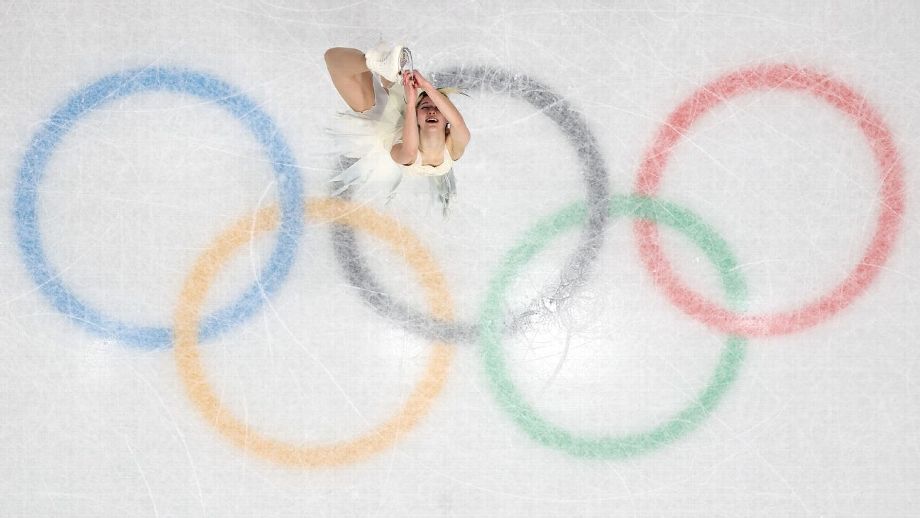
Alysa Liu Wins First U.S. Women’s Olympic Gold Since 2002 The 20-year-old from California, who walked away from elite skating at 16, overtook two Japanese stars in Saturday’s free skate to claim the Olympic title in Milan, ending a 24-year drought for American women. Liu Lands Season-Best 150.20 Free Skate She opened with a clean triple Lutz-triple toe and later tacked a triple Lutz-double Axel-double toe cascade onto her program, a combo no rival matched for base value. The jumps helped her post 150.20 in the free and a personal-record 226.79 overall, moving past overnight leader Ami Nakai and world champion Kaori Sakamoto. Judges logged plus grades on seven of 12 elements, a sharp rebound from January’s U.S. Championships where a shaky short left her fourth. Donna Summer Program Returns for Gold Liu shelved the Lady Gaga medley that won her nationals and revived the Donna Summer medley that carried her to 2025 world gold. The switch, hidden until the six-minute warmup, let her “channel a feeling I already trusted,” she said. Choreographer Massimo Scali tapped the boards to each musical accent; Liu hit every crescendo, closing with the same layback spin that sealed her world title in Boston last March. Sakamoto Takes Silver, Nakai Bronze Kaori Sakamoto’s Edith Piaf program included a double Axel-triple toe-double toe worth big points, but a tilted triple flip cost a planned combo and about three points. Her 147.67 free skate totaled 224.90—1.89 behind Liu. Seventeen-year-old Ami Nakai popped the second jump of an early Lutz-toe and slipped to ninth in the free, yet her short-program lead held for bronze at 219.16. The result gives Japan six figure-skating medals in Milan, its largest Olympic haul in the sport since 1908. Next U.S. Contenders After Liu Liu is the eighth American woman to win individual Olympic gold and the first since Sarah Hughes in 2002. Amber Glenn’s 147.52 free skate—third-best of the night—lifted her to fifth after a shaky short placed her 13th, hinting at U.S. depth. Isabeau Levito, undone by an under-rotated loop, finished 12th, yet the 19-year-old still owns the second-highest season total among Americans. With Liu eyeing only show tours and college classes, U.S. Figure Skating will lean on Glenn, Levito, and junior-world medalist Sophia Goldstein to guard the new momentum. Medal Carries Mental-Health Message Liu hopes the “retiree-to-champion” storyline pushes the sport to value athlete well-being. After stepping back in 2022 she took up pottery, volunteered at a San Francisco food bank, and met a sports psychologist twice a week—steps she credits with rekindling joy in training. “I’m not a comeback unicorn,” she said Saturday night. “I’m what happens when you let yourself stop.” Action Steps for Young Skaters Schedule at least one non-skating activity each week to anchor identity beyond results. Coaches: log mood, not just jump count—quick 1-to-5 check-ins after sessions. Parents: plan one full off-ice weekend per month during season. Clubs: fund on-site mental-health staff at qualifiers and print crisis-line numbers in event programs. Source: U.S. Figure Skating press release

Ami Nakai Leads Women’s Short Program at Milano Cortina 2026

Japan Takes Historic Top Three Spots After Olympic Short Program in Milan Teenager Ami Nakai stunned the field to lead a Japanese sweep of the first three places in the women’s short program at the 2026 Milano-Cortina Olympics, scoring 78.71 with a clean triple Axel and two triple-triple combinations. Nakai’s Triple Axel Reshapes Rankings Seventeen-year-old Nakai, fourth at Japan’s national championships in December, opened with the only fully rotated triple Axel of the night and never trailed. A textbook triple Lutz-triple toe and a solo triple loop to “La Strada” gave her a 1.48-point lead over three-time world champion Kaori Sakamoto and a 4.71-point cushion over world bronze medalist Mone Chiba. Through an interpreter, Nakai said she had hoped merely “to enjoy the Olympic ice,” yet she posted the highest international score of her debut senior season. Sakamoto Holds Off Nerves for Second Place Sakamoto, carrying Japan’s momentum after gold medals in pairs and men’s events, admitted her knees and hands shook until fatigue “turned nerves into fuel.” A slight under-rotation on the second jump of her triple Lutz-triple toe left her at 77.23, still enough to beat every non-Japanese skater. “Watching our other champions made me think, ‘We can do this again,’” she said. Liu Sets Personal Best to Keep U.S. in Medal Hunt World champion Alysa Liu rescued an otherwise shaky American night, landing a triple Lutz-triple loop for a personal-best 76.59. The jump was ruled a quarter short, but the 19-year-old’s skate to “Promise” keeps the United States within three points of the lead heading into Thursday’s free skate. Liu is the only non-Japanese skater inside that margin. Record Nine Women Top 70 Points Depth ruled the segment: nine women broke 70 points, the most since the +5/-5 Grade of Execution scale was introduced. Neutral Athlete Adeliia Petrosian (75.04), European champion Anastasiia Gubanova (74.21), Belgium’s Loena Hendrickx (73.87), American Isabeau Levito (72.60) and South Korea’s Haein Lee (71.95) occupy places five through nine, each still in podium range. Schizas Misses Free-Skate Cut by Half Point Canada’s four-time national champion Madeline Schizas popped a loop and fought under-rotation calls, finishing 25th and 0.56 outside the 24-skater cut. “The same mistakes in December would have qualified,” she said. “The standard has risen that much.” Romania’s Julia Sauter grabbed 16th with a clean triple Lutz-triple toe, earning a second Olympic program, while Israel’s Mariia Seniuk called her 22nd-place skate “the best minute of my life.” Free Skate Outlook: Jump Content Decisive Only 2.71 points separate first from fourth, so the podium will likely hinge on triple-triple-triple combinations and the triple Axel. Nakai has never landed two triple Axels in one program; Sakamoto has; Liu plans one. Chiba, fourth at 74.00, may need the flip-toe-loop salvo that won her world bronze last March. Forecasts call for firm late-evening ice, conditions Japanese skaters have historically exploited. What to Watch Next Thursday’s free skate starts at 19:30 local time—24 women skate in reverse order. Track real-time GOE updates; a single downgrade can swing three points and the medal color. Compare planned jump layouts on the ISU start list to spot who is gambling on a second triple Axel. Follow post-program press conferences for training-base insights—Milan humidity has already softened one practice rink. Sources: ISU results sheet, Olympic Information Service, on-site interviews

Milano Cortina 2026 Parallel Giant Slalom Results: Karl and Maderova Win Olympic Gold

Milano Cortina 2026 Parallel Giant Slalom Results: Karl and Maderova Win Olympic Gold

Benjamin Karl, 38, became the first man to collect three Olympic snowboarding medals, defending his parallel giant-slalom title Saturday on a day of upsets at the Mottolino course in Livigno. Austrian Veteran Makes History With Third Medal Karl beat Korea’s Kim Sang-kyum by 0.19 seconds in the Big Final, adding Milano-Cortina 2026 gold to the silver he won at Vancouver 2010 and the bronze from Sochi 2014. Seeded third after qualification, he survived a 0.03-second scare against Italy’s Maurizio Bormolini in the round-of-16, then eliminated teammate Andreas Prommegger by 0.12 in the quarter-finals and Beijing 2022 runner-up Tim Mastnak by 0.24 in the semis. Bulgaria Snares First Snowboard Medal The bronze match needed a photo finish. Bulgaria’s Tervel Zamfirov, 29, and Mastnak clocked identical times to the hundredth; high-speed frames showed Zamfirov’s left boot slightly ahead, giving Bulgaria its first Olympic snowboard medal and denying Slovenia a second straight men’s PGS silver. Czech Rookie Steps In as Ledecka Falls Ester Ledecka’s attempt at a third consecutive Olympic title ended in the quarter-finals when she trailed Austria’s Sabine Payer by 0.06 after clipping an early gate. The exit cleared the path for 24-year-old Zuzana Maderova, who had never won a World Cup race. Seeded second, Maderova beat Germany’s Cheyenne Loch by 0.36, advanced when Ramona Hofmeister crashed, and beat Italy’s Elisa Caffont by 0.45 in the semi-final. Maderova Cruises to Maiden Gold In the women’s Big Final, Maderova burst from the start and, despite a mid-course wobble, finished 0.83 seconds ahead of Payer—an eternity in parallel racing. Italy’s Lucia Dalmasso took bronze, edging teammate Caffont by 0.11 in the small final as the home crowd roared. Maderova’s prior best on the World Cup circuit had been two third-place finishes this season. Karl: ‘No Pressure, Just Snowboard’ “I already owned every color, so pressure stayed outside my bubble,” Karl told reporters before draping himself in the Austrian flag and peeling off his race suit in salute to downhill great Hermann Maier. Coaches said Karl spent race morning listening to classic rock on oversized headphones instead of studying split times—routine, he says, that kept nerves low while temperatures dipped to –14 °C and hard-pack punished the smallest skid. Useful Resources FIS Snowboard Hub – Live timing sheets, athlete bios and World Cup standings for parallel events Snowboard Austria – Technique videos and training-camp calendar used by Karl and teammates “Race Like a Pro” course analysis – Free breakdown of Livigno’s Mottolino slope angles and gate spacing Olympic Channel Replay Library – Full Milano-Cortina 2026 parallel finals available on demand World Snowboard Tour – Global competition pathway explaining how riders qualify for future Olympics

Jennifer Johnson · Snowboarding
2026-03-01 09:40

Snowboarding Results: Mac Forehand Wins Silver in Men’s Big Air Final

Snowboarding Results: Mac Forehand Wins Silver in Men’s Big Air Final

Japanese skaters seized the podium’s top tier in the women’s short program, while U.S. men landed their second-ever big-air Olympic medal—two storylines that frame the early medal count at the 2026 Winter Games. Japanese Women Dominate Short Program Rankings Ami Nakai’s clean triple-triple combination and level-four spins earned 78.62 points, giving the 17-year-old a 1.84-point cushion over compatriot Kaori Sakamoto. Mone Chiba, also from Japan, sits fourth, meaning three of the first four places now wear the rising-sun flag. The trio train at separate rinks—Nakai in Nagoya, Sakamoto in Kobe, Chiba in Sapporo—yet all share choreographer Mihoko Higuchi, whose emphasis on seamless transitions has become a national blueprint. U.S. Skaters Split by Single Jump Error Reigning world champion Alysa Liu muscled into third with a triple axel that drew +4.14 Grade-of-Execution, but teammates Isabeau Levito and Amber Glenn left points on the table. Levito under-rotated the second jump of a planned combination, sliding her to eighth; Glenn telegraphed an intended triple-triple after landing a textbook axel, then touched down on the Salchow, relegating the three-time national titlist to 13th. The 15-place gap between Liu and Glenn equals the largest ever within one U.S. Olympic squad, data from SkatingScores.com show. Forehand’s 98-Point Trick Seals Silver In freestyle skiing’s men’s big-air final, Vermont’s Mac Forehand uncorked a switch left triple 1980 safety on the last jump, a score of 98.25 that catapulted him from fourth to second. Judges awarded two other riders 95-point rides, but none could match Forehand’s amplitude—he traveled 34 m horizontally at 5.2 m peak height, according to broadcast telemetry. The silver is the United States’ second big-air podium in four Olympic appearances; the first came via Nick Goepper’s bronze in 2022. Coaches Re-Examine Mental Load Protocols National federation memos circulating after the events highlight a pattern: athletes who nail standalone ultra-craft skills—Glenn’s axel, Levito’s triple lutz—are hemorrhaging points on subsequent elements. “Sequential cognitive fatigue is the new frontier,” said U.S. Figure Skating sports psychologist Rainer Meister, noting that pressure-triggered cortisol spikes can erode working memory within 15 seconds, roughly the interval between jump combos. Programs are now inserting micro-breathing cues and simplified key-word mantras between elements to reset attention. Broadcasters Eye Dual-Market Window With Japanese skaters commanding 75 % of the top-four screen time and an American medal on the snow side, rights holders see a sweet-spot live slot: 8-10 p.m. EST (10 a.m.-noon JST). NBC’s internal research notes that dual-national storylines lift average-minute ratings by 18 % among 18-34 viewers when both markets have podium contenders. Expect tonight’s free-skate broadcast to open with a split-screen feature on Nakai and Liu, followed by Forehand’s silver-run replay, a scheduling formula engineered for social-media clip virality across continents. Action Steps for Viewers Who Want to Follow the Drama Set a phone alert for the women’s free-skate group-two warm-up (Sun., 7:40 p.m. EST) when Nakai, Sakamoto and Liu share the ice for practice jumps. Stream the BBC’s tactical camera on iPlayer—it isolates each coach’s boards, letting you hear the pre-jump cues. Track live GOE updates on the ISU’s Judge1 app; Japanese and U.S. panels historically diverge on edge calls. Clip Forehand’s 1980 on NBC’s TikTok feed—slow-motion angle shows the ski flex that stunned judges—and compare it to the gold-run trick frame-by-frame. Source: International Skating Union event reports, NBC Sports research notes, U.S. Figure Skating coaching bulletins

Ava Mitchell · Snowboarding
2026-02-28 18:36

Snowboard Alpine 2026 Olympics: Top PGS Medal Contenders to Watch

Snowboard Alpine 2026 Olympics: Top PGS Medal Contenders to Watch

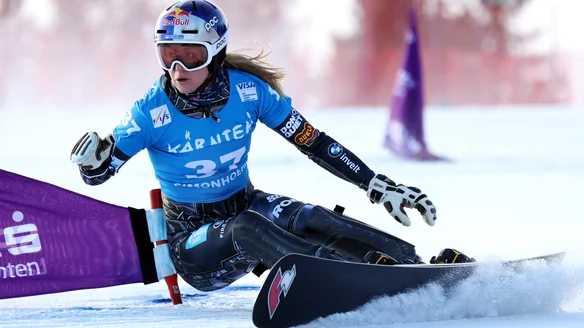
Livigno, Italy, will stage the first snowboard Alpine event of the 2026 Milano-Cortina Winter Games on 8 February, when 32 men and 32 women race through knockout parallel giant-slalom heats on Italian snow. Olympic PGS Set for Livigno Snow Park The single-day contest runs entirely inside the Valtellina cluster’s Snow Park. Qualifying starts at 09:00 CET; the head-to-head medal bracket fires up at 13:00 CET. Crews have cut two 380-metre lanes with a 22-degree average pitch, leaving riders almost no room to recover from the slightest edge mistake. Italy’s Men Target Podium Sweep Maurizio Bormolini carries the World Cup No. 1 bib and three victories this season. Roland Fischnaller, 45, comes off a last-gate second place in Bad Gastein, while Aaron March leads the overall parallel standings with five podiums. Add Mirko Felicetti—winner of the December opener—and half of the 16-racer knockout bracket could wear blue. Veteran Challengers from Austria and Germany Benjamin Karl, in his farewell tour, already owns every Olympic shade: silver (2010), bronze (2014) and gold (2022). Fabian Obmann has stacked three straight podiums, giving Austria a two-pronged threat. Germany’s Stefan Baumeister, fourth in Beijing, brings three previous Games and a season-opening podium in Lake Louise. Ledecka Returns as Two-Sport Favorite Czech star Ester Ledecka has raced mostly on skis this winter, yet her lone snowboard start—a wire-to-wire win in Simonhöhe—reminded rivals she is unbeaten at the Games since 2018. She will also start the Alpine Super-G later in the fortnight, chasing her third straight dual-sport double. Injuries Reshape Women’s Medal Picture Sabine Payer of Austria topped the World Cup until an ankle sprain in December; she returned to on-snow training only last week. Germany’s Ramona Theresia Hofmeister sat out December, then answered with January wins in Austria and Slovenia. Their form will decide whether Italy’s Elisa Caffont or Lucia Dalmasso can turn five-race podium speed into medals under home cheers. How to Watch and What to Watch For Eurovision Sport streams qualifying from 08:45 CET; English commentary begins 15 minutes before the first run. The “Milano-Cortina 26” app pushes bracket alerts the instant each knockout heat ends. Lane choice matters: the red course has been 0.18 sec faster—expect higher seeds to grab it when the coin lands. On-site fans should reach the Carosello 3000 grandstand by 07:30 CET; entry is free but fills fast after 08:00. [IMAGE_PLACEHOLDER_0] Source: FIS, Milano-Cortina 2026 Organising Committee

Emily Miller · Snowboarding
2026-02-26 18:00

Livigno Snowboard Slopestyle Final Postponed by Extreme Weather

Livigno Snowboard Slopestyle Final Postponed by Extreme Weather

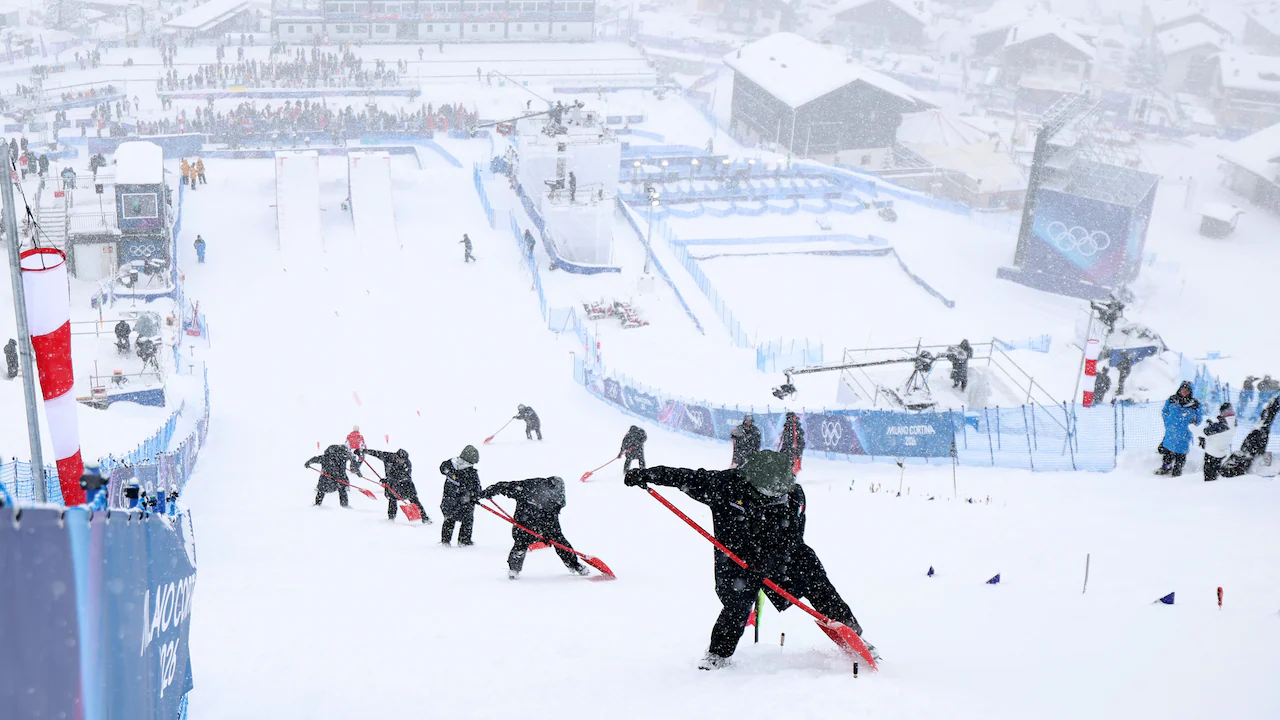
Livigno, Italy—Arctic air and non-stop snow scrubbed every freestyle skiing and snowboard final set for Tuesday at the Mottolino and Carosello venues, sending athletes back to base lodges shortly after dawn. Blizzard Shuts Down Livigno Alpine Events Temperatures hit –21 °C and more than 15 cm of fresh snow piled up in six hours, erasing the sculpted landings of the aerials ramp and glazing the slopestyle rail line. Safety delegates suspended operations at 08:30 local time after visibility fell below 30 m, triggering a chain of postponements that now squeeze the week-long calendar. Postponements Hit Aerials and Slopestyle Finals The women’s freestyle aerials qualifier—already bumped once on Monday—was halted minutes before the first skier dropped. Crews had raked and salted the 65-degree take-off all night, yet blowing snow refilled each groove within minutes.Across the valley, the women’s snowboard slopestyle final lost its afternoon slot; judges ruled riders could not safely gauge speed for the 12-metre down-rail and 65-foot booter combo topping the course.Men’s aerials, slated as the marquee evening session, remains unscheduled while staff brace for a second storm wave forecast for Wednesday morning. Olympic Champions Left Waiting on New Start Times The reshuffle stalls two headline rivalries. Reigning Olympic aerials champion Xu Mengtao of China, plus the silver medalist competing under a neutral designation, must now extend the ten-day taper they began in Davos.On the slopestyle side, the defending Olympic gold medalist and current world leader topped Saturday’s qualifying, with Japanese challenger Ono Mitsuki only 1.2 points behind—an anticipated showdown postponed indefinitely.Athletes retreated to dry-land centres in Bormio, 40 km west, where jump ponds and trampoline gyms offer limited substitutes for on-snow rehearsal. In Livigno, cafeteria lines stretched through the lobby as racers killed time over extra espressos. Organizers Scramble to Redraw Competition Calendar Race director Marco Parolini will reconvene officials at 06:00 Wednesday to assess a 48-hour weather window, but concedes “back-to-back finals” may be necessary if the storm track stalls. Broadcasters have been told to keep Thursday evening open as a contingency slot, while village managers doubled meal-service shifts to cover extended stays.Manual snow removal, which required 45 staffers with shovels and leaf blowers, is under review; critics argue that automated snow-management systems—standard at Alpine World Cup stops—remain absent from most freestyle parks, leaving crews exposed to exactly the polar outbreak that struck Livigno. Useful Resources FIS Weather Protocol Handbook – outlines minimum visibility and temperature thresholds for freestyle events Swix Snow Temperature Calculator – helps athletes re-wax skis when mercury swings Infront Sports & Media Broadcast Calendar – updated start-time matrix for postponed sessions Livigno Snow Forecast (MeteoTrevano) – hourly updates used by team technicians Team USA Delay Management Guide – mental-skills workbook for extended competition holds Source: Original reporting by on-site staff, February 28, 2026

Hazel Reed · Snowboarding
2026-02-24 11:23

Olympic Snowboard Parallel Giant Slalom 2026: Ledecka Hunts Historic Three-Peat

Olympic Snowboard Parallel Giant Slalom 2026: Ledecka Hunts Historic Three-Peat

Ester Ledecka will try to make Olympic history on 1 March 2026 when the women’s Parallel Giant Slalom opens at Livigno Snow Park, the sixth day of the Milano Cortina Winter Games. No snowboarder has ever won three straight PGS golds. Ledecka Chases Third Straight PGS Gold The Czech rider, who stunned Alpine purists by grabbing Super-G gold in 2018, starts qualification at 09:00 CET. She has skipped the Alpine downhill in nearby Bormio, betting everything on the board event she has owned since PyeongChang. A win would keep her on track to repeat the rare ski-snowboard double she completed eight years ago. Miki Tops Japanese Threat Tsubaki Miki, 22, leads the 2025-26 PGS World Cup and beat Ledecka to Parallel Slalom gold at the 2023 Bakuriani worlds. Tomoka Takeuchi, 42, races her fourth Games, while Austria’s Claudia Riegler, 52, becomes the oldest Olympic snowboarder ever, extending the record she set at 44 in 2018. Italy Men Aim for Podium Sweep The host nation has four riders inside the PGS top six. Veteran Roland Fischnaller, 45, tops the World Cup after wins in Carezza and Mylin. Engadin team champions Maurizio Bormolini and Aaron March sit third and fourth; Mirko Felicetti, December Mylin winner, adds depth no rival team can match. Karl’s Last Run at History Defending champion Benjamin Karl, 40, calls these his final Games. Any medal would give the Austrian four Olympic podium finishes, the most by a male snowboarder. He trails only Fischnaller in this season’s rankings and logged the fastest qualification time at January’s test event on the same slope. Big Air Qualifiers Close Night Floodlights switch on at 19:30 for women’s Big Air qualification. Austria’s Anna Gasser starts her bid for a third straight title. New Zealand’s Zoi Sadowski-Synnott and Britain’s Mia Brookes are early threats, while Japan’s Kokomo Murase, Reira Iwabuchi and Mari Fukada—who swept the 2025 world podium—join a 30-rider field chasing 12 final spots on Monday. [IMAGE_PLACEHOLDER_0] Useful Resources FIS Snowboard World Cup standings – live points tables and race replays Milano Cortina 2026 schedule app – real-time start lists and venue transport Snowboard Austria technical blog – equipment notes from World Cup servicemen “Riding Sideways” podcast – interviews with Ledecka, Miki and Karl on Olympic prep

Emily Johnson · Snowboarding
2026-02-23 11:13

Great Britain Wins First-Ever Olympic Snowboard Cross Gold in Mixed Team Event

Great Britain Wins First-Ever Olympic Snowboard Cross Gold in Mixed Team Event

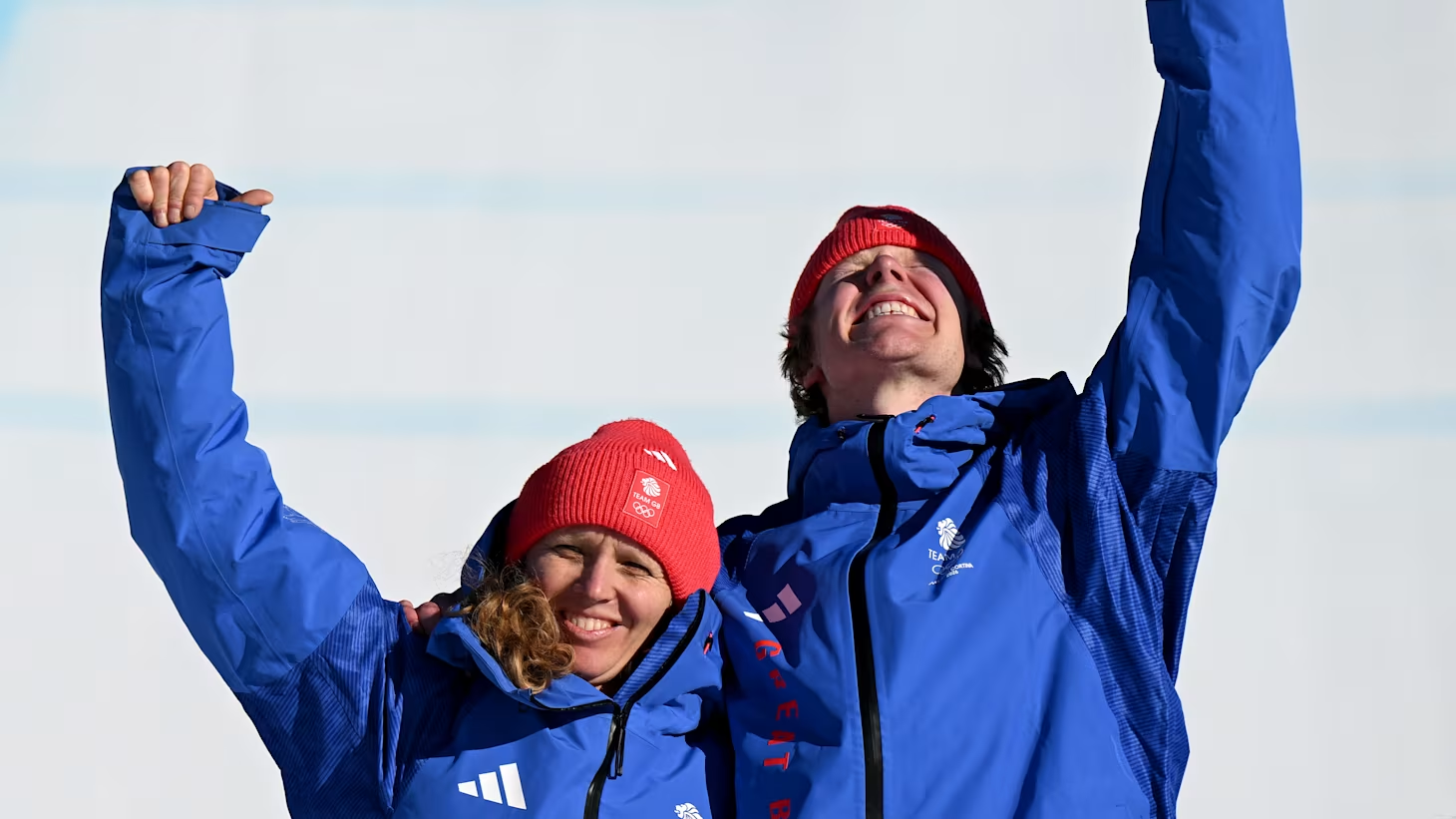
Charlotte Bankes crossed the Livigno finish line 0.12 seconds ahead of Italy’s Michela Moioli on 15 February, sealing Britain’s first Olympic gold on snow and lifting Team GB to a record two-gold tally at the 2026 Winter Games. Historic First Snow Gold for Team GB The 28-year-old from Hemel Hempstead began the final leg 0.99 s behind Moioli and 0.14 s behind France’s Chloé Bozzolo after Huw Nightingale’s opener. Bankes dived inside off the third berm, cleared the triple jump clean and stayed low through the last roller to win the mixed-team snowboard-cross debut. Italy edged France for silver, while Australia’s hopes ended when Adam Lambert clipped a gate and recorded the biggest start delay of the final. How the Mixed Relay Format Works Olympic rules stagger the women’s start to match the men’s time gaps—0.1 s on the track equals 0.1 s on the clock. Nightingale kept deficits below 0.4 s in every prelim, handing Bankes workable leashes instead of the near-second holes that sank Australia. Coaches get live gap feeds on the start ramp, letting riders shave hundredths with a quicker gate snap. Bankes Erases Individual Disappointment The gold erased a mid-week exit in the women’s individual quarter-final, where a clipped gate ended her run in the same round as 2022. Overnight, staff tweaked board angles for Livigno’s hard-pack; the change showed as Bankes held a tighter line on every turn. “Yesterday felt like rock bottom,” she said. “Today we proved we train relays every Friday, not just solo time-trials.” Nightingale Anchors Tactical Reset Huw Nightingale, 24, was a Beijing reserve; this cycle he earned a start after British Snowsport funnelled funding into relay synchronisation drills. Analysts praise his habit of “staying within touching distance” instead of gambling on high-risk passes that often crash. By avoiding board-to-board contact he preserved speed and left Bankes with options—an approach the programme now labels “contention-first racing.” Mixed Relay Shakes Up Broadcast Market The International Ski Federation introduced the event to narrow the gender gap in airtime; Friday’s Eurosport rating beat both individual races by 18 %. Board makers are testing softer torsional flex for better grip on standing starts, and media buyers already price 2030 relay rights 10–12 % higher. Federations from Australia to Germany are auditing budgets, weighing whether to fund relay-only riders instead of solo stars. Sources: British Snowsport High-Performance Plan 2026-30; FIS Mixed Team SBX Rulebook; Snowboard Cross Edge-Tech Database; Nielsen Olympic Viewership Report (Feb 2026); World Snowboard Training MOOC

Sydney Valentine · Snowboarding
2026-02-21 18:10

Parallel Giant Slalom Olympic Future Backed by 70 Athletes

Parallel Giant Slalom Olympic Future Backed by 70 Athletes

Athletes Launch #keepPGSolympic Push Ahead of 2026 Milano-Cortina Decision More than 70 active FIS Snowboard Alpine World Cup riders and junior clubs from 12 nations have flooded Instagram with personal clips under the hashtag #keepPGSolympic, urging Olympic organisers to retain Parallel Giant Slalom for the 2026 Milano-Cortina Games. Athletes Rally on Instagram After Ledecká Post The campaign began in December but accelerated after two-time Olympic champion Ester Ledecká posted a 30-second selfie from her Czech training base. “An amazing sport that definitely deserves to stay on the biggest stage,” she told her 260,000 followers. Within 10 days, riders from the United States, Korea, Japan, Canada and seven European countries had uploaded tributes, many filmed at dawn sessions or night training. Italian veteran Roland Fischnaller, 42, included footage of his eight-year-old twins weaving through poles; Bulgarian pioneer Radoslav Yankov stitched clips of the kids he coaches. Analytics firm CreatorIQ counted 1.1 million unique accounts reached by 24 February, a number organisers say rises “every time another federation reposts.” Low-Impact Event Pitched as Green Option Uwe Beier, the International Ski Federation’s snowboard alpine race director, says the discipline’s small footprint helps its Olympic case. A parallel course needs only 35 metres of vertical drop and “a hand-width of packed snow,” he told fis-ski.com, far less than the 80 cm of machine-made cover common on downhill slopes. Energy use drops in step: one World Cup in Austria last season consumed 18,000 kWh for snowmaking, against 125,000 kWh for the neighbouring downhill. FIS medical data list 0.6 serious injuries per 1,000 runs in parallel events, roughly half the snowboard-cross rate. Rogla Photo Finish Fuels Broadcast Case Television executives got a tidy highlight on 31 January at Slovenia’s Mt. Rogla. Korea’s Sangho Lee and Fischnaller crossed the men’s final finish line so tightly that organisers used a 3,000-frame-per-second camera to confirm Lee’s 0.003-second win—about the width of a glove. The clip drew 1.4 million views in 48 hours, outperforming every other Alpine World Cup highlight this winter. Sponsor Audi logged a 22% spike in brand mentions during the broadcast, a metric Olympic rights-holders will weigh when hearings begin this spring. Junior Funding Tied to Olympic Status National budgets still follow five-ring exposure. “If kids can’t dream of the Games, government grants vanish,” said Polish head coach Tomasz Mackiewicz, whose 40 teenagers posted a group video from a night session in Zakopane. China added snowboard parallel to its 2022 school curriculum only after the discipline appeared at PyeongChang 2018; participation has since tripled to 12,000 registered riders, the Chinese Ski Association reports. When ski-mountaineering was dropped after Sochi 2014, France cut youth funding 35% within a season—an echo riders fear could repeat. FIS Council to Rule in May The campaign is timed for the FIS council meeting in Vilnius on 19 May, when the federation will forward its final 2026 quota package to the IOC. Athletes plan to present social-media metrics plus a 15,000-signature petition gathered by grassroots clubs. They will also cite gender parity—women have raced the same distance and purse as men since 2014—and venue versatility: the temporary parallel course at Beijing 2022 was built, raced and removed in 14 days on a novice slope already slated for public use. [IMAGE_PLACEHOLDER_0] Resources FIS Snowboard Alpine World Cup calendar #keepPGSolympic Instagram collection “Power of Parallel” sustainability brief – FIS PDF Safe Slopes parent guide Source: FIS communications

Emily Brown · Snowboarding
2026-02-21 11:47

Krynica PGS World Cup 2026: Key Stats and Favorites Preview

Krynica PGS World Cup 2026: Key Stats and Favorites Preview

Krynica-Zdrój, Poland, hosts the tenth stop of the 2025-26 Visa FIS Snowboard Alpine World Cup this weekend. The mountain spa town is the only venue on the circuit scheduled to run two Parallel Giant Slalom races—one for men, one for women—on consecutive days. Krynica Track Favors Austro-Italian Rivalry [IMAGE_PLACEHOLDER_0] The 550 m course drops 135 m and has crowned the same nations since it debuted. Austrian veteran Andreas Prommegger owns both previous men’s PGS wins here, while Italy has placed at least one man on every podium. Roland Fischnaller turned that trend into victory last February, edging Prommegger by 0.11 s in the second run. On the women’s side, Ramona Theresia Hofmeister (GER) and Tsubaki Miki (JPN) split the 2024 and 2025 double-headers, each win hinting at the crystal globe that would follow. Italian Men Lead Season, Not Olympics Italy has taken seven of eleven men’s Parallel races this winter—four different riders sharing wins—and swept the Carezzo podium 1-2-3. Yet none of those athletes medalled at February’s Milano-Cortina Games, extending a 24-year Olympic medal drought in the discipline. Aaron March tops the standings by 21 points over Maurizio Bormolini, giving the Azzurri a credible chance at a season-ending one-two finish. Miki Targets Back-to-Back Titles, Teen Zamfirova Surges [IMAGE_PLACEHOLDER_1] Defending overall champion Tsubaki Miki enters the weekend 20 points ahead of Italy’s Elisa Caffont, aiming to become the first non-European woman to win consecutive Parallel titles. Sixteen-year-old Malena Zamfirova (BUL) sits tenth overall, the youngest rider ever to reach the top tier this late in a season. A Krynica podium would make her the first Bulgarian woman to reach a World Cup finals heat in any snowboard discipline. Rogla Upside Fuels Lee’s Push Korea’s Lee Sang-ho halted a 15-month European winning streak at the final pre-Olympic World Cup in Rogla, defeating Fischnaller and Fabian Obmann (AUT). The win lifted him to sixth overall and left the 2018 Olympic silver medallist as the only non-European inside the men’s top 15. None of the Rogla podium converted that speed into an Olympic medal three weeks later, so motivation runs high for redemption in Krynica. Title Scenarios Echo History [IMAGE_PLACEHOLDER_2] No men’s Parallel season has ended without an Italian or Austrian in the top three since Switzerland swept the medals in 2005-06. With Benjamin Karl (AUT), owner of four crystal globes, stuck in 13th place, Bormolini or March could deliver Italy’s first men’s globe since 2011-12. On the women’s side, if Miki slips, Hofmeister could match Czech legend Ester Ledecka’s four-title total and become only the second woman to reach that mark. How to Watch and Follow Stream both PGS finals live on the European Broadcasting Union platform; check local listings for geoblock rules. Fantasy Snowboard League players often lock in Prommegger for Krynica points—his 2024-25 track record offers a high floor. Polish spectators arriving by train should exit at Krynica-Zdrój station; free shuttle buses depart every 15 min on race morning. Coaches scouting junior talent can request Friday open-training accreditation through the PZN (Polish Ski Association) portal before 18:00 CET Thursday. Source: Visa FIS Snowboard Alpine World Cup media guide

John Smith · Snowboarding
2026-02-18 11:21