Great Britain has obtained its first-ever Olympic gold medal in a snow-based discipline, with Charlotte Bankes and Huw Nightingale winning the mixed team snowboard cross event at Livigno Snow Park on 15 February. The victory marks Team GB's second gold of the 2026 Winter Games, establishing a record medal haul for a single Winter Olympics.
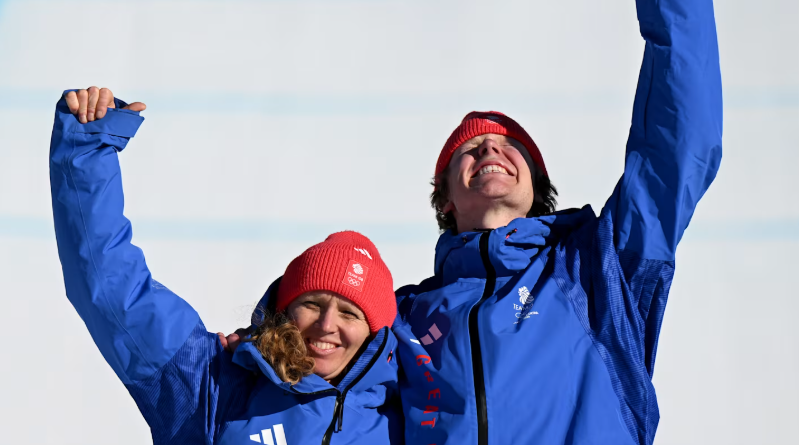
Competition Structure and Results
The mixed team format utilizes a two-run structure in which male competitors complete initial descents, with finishing time gaps converted to start delays for female teammates. Quarter-final elimination progresses through semi-finals to medal rounds.
Final standings:
- Gold: Great Britain (Bankes/Nightingale)
- Silver: Italy (Moioli/Sommariva)
- Bronze: France (Bozzolo/Casta)
- Fourth: Australia (Baff/Lambert)
- Performance Analysis
- Nightingale maintained position within leading groups throughout preliminary rounds, enabling Bankes—a competitor noted for strong finishing capabilities—to overcome start delays. In the final round, Bankes started 0.14 seconds behind the French competitor and 0.99 seconds behind the Italian pairing, executing a pass on the inside line to secure victory. The Italian team subsequently overtook France for silver position.
- Historical Context
- The result follows Bankes' elimination in the women's individual event quarter-finals, replicating a pattern from the 2022 Winter Games. The mixed team victory represents progression from 2023 World Championship success in the same format. Nightingale, 24, contributed consecutive consistent performances that maintained competitive positioning for the anchor leg.
- National Implications
- Italy secured silver in a snow-based event on home terrain, while France obtained bronze. Australia's fourth-place result followed a fall during the male competitor's descent, creating maximum start delay penalties.
For National Sports Federations: Mixed team formats are expanding across Winter Olympic disciplines, creating medal opportunities distinct from individual event specialization. Program development strategies should evaluate whether resource concentration in individual or team formats yields optimal medal probability. British Snowsport's investment in team synchronization protocols, rather than sole individual performance optimization, produced measurable competitive advantage.
For Coaching Staff: Psychological preparation frameworks that emphasize competitive enjoyment over technical perfection demonstrated efficacy in high-pressure final runs. The correlation between reduced performance anxiety and execution quality suggests revision of traditional intensity-based preparation models, particularly in judged and timed snow sports.
For Equipment Manufacturers: Start gate delay mechanisms in mixed team events create specific equipment demands distinct from individual competition. Edge control and acceleration characteristics during standing start procedures may require specialized board configurations not currently addressed in standard product lines.
For Broadcast Rights Holders: Mixed gender team events generate audience engagement metrics exceeding individual competitions in comparable disciplines. The relay-style format maintains narrative tension across gender-specific segments, potentially addressing demographic engagement gaps in traditional winter sport viewership. Rights valuation models should weight mixed team formats accordingly in future Olympic cycle negotiations.
Comments